

An exhibition of 46 paintings by 15 artists from four generations, titled ‘Bistrit Barthman’, began last Saturday at the Kamrul Hasan Gallery of Bengal Shilpalaya in Dhanmondi, the capital.
The exhibition features renowned artists from five decades, including Hashem Khan, Rafiqun Nabi, Abdus Shakur Shah, Nazli Laila Mansur, Farida Zaman, and Ranjit Das.
The organizers say the main idea of the exhibition is to capture the diversity of the artistic journeys and experiences of these 15 artists from the 1960s to the present. They say it is not a history of a continuous style; rather, it is a living exploration of how time settles on the artist’s canvas.
It is seen that while the work, variations, and ideas of the painters of the sixties and seventies share a sense of simplicity and awareness of tradition, the impression of post-modernism in the work of the artists of the eighties has become more pronounced in the expression of the artists of the nineties and zeros. As a result, this exhibition will provide viewers and connoisseurs with an opportunity to witness a kind of continuous change in our fine arts over the past 50 years.
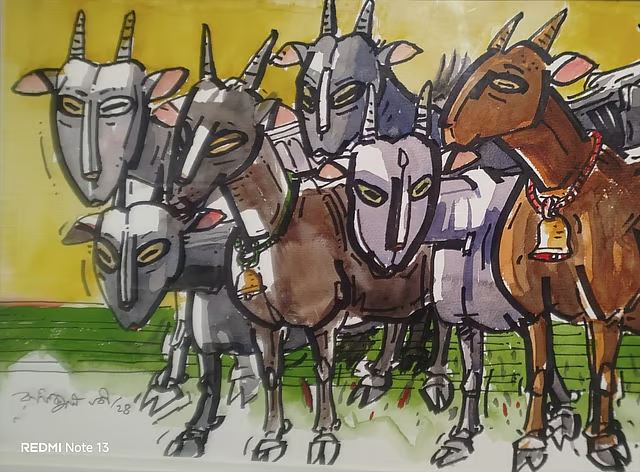
‘Composition with Goat’, Rafiqun NabiPhoto: Courtesy of the author
Now, among the country’s artists, veterans Hashem Khan and Rafiqun Nabi are professors emeritus at the Faculty of Fine Arts.
‘Group of Crows’ is one of Hashem Khan’s four works. The skillful drawing, composition, color arrangement and presentation of the artist attract viewers and connoisseurs. The painting ‘Ilisher Ghar Meghna’, painted this year, depicts a flock of dead hilsa after being caught in a net. Another painting by the artist is ‘Lal Sangeet’.
Three of Rafiqun Nabi’s four paintings, painted in acrylic on paper, feature his cartoon character Tokai, in different works and periods. Another work features his composition of lined-up goats in various poses.
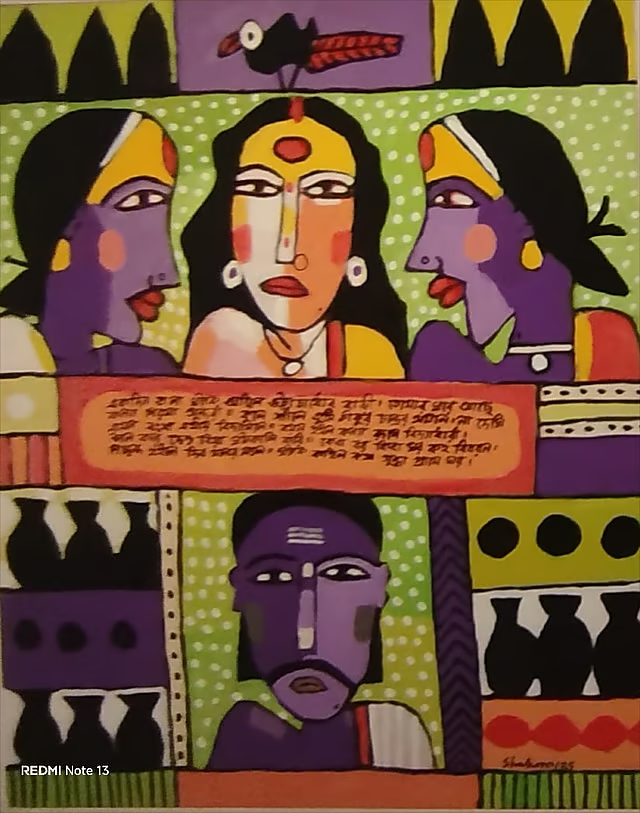
‘Village Story’, Abdus Shakur ShahPhoto: Courtesy of the author
These are works from 2024. Outstanding drawing skills and simplicity and easy-going attitude in painting are the main qualities of his paintings, along with a sense of humor.
Artist Abdus Shakur Shah has been creating his paintings for three decades, using watercolors and acrylics on paper or canvas, depicting the characters of Mymensingh folk songs, Mahua, Malua, Kajal Rekha, Nader Chand, Byangma-Bangami Pakhi, Bagh-Vyadh, and parts of the stories. One of his three works is titled ‘Kajal Rekha’, while the other two are called ‘Gramer Golpo’.
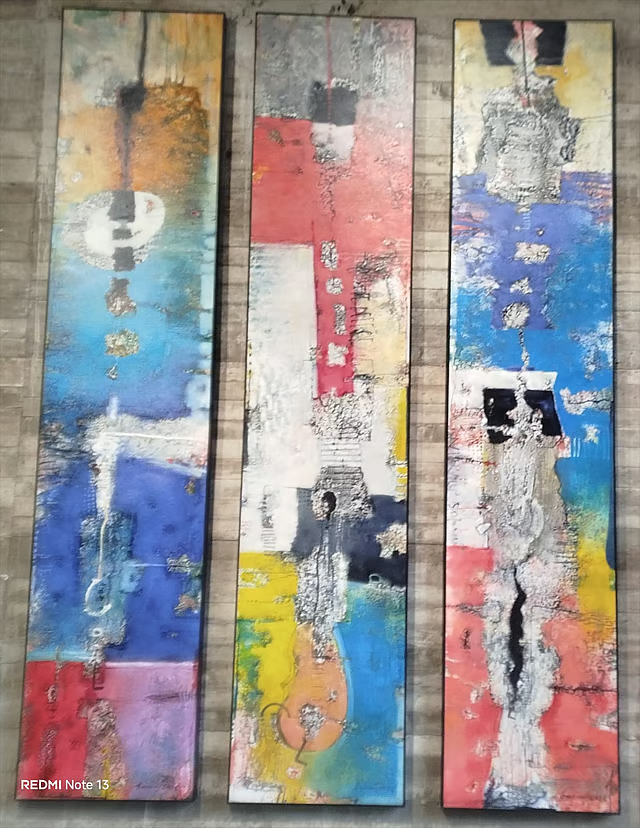
‘Formation’, Muhammad YunusPhoto: Courtesy of the author
Nazli Laila Mansur consistently brings to the fore, here too, the social problems of our country, patriarchal attitudes, and violence against women and children, centered on Cubism.
Like her predecessors, Farida Zaman also raises the issue of a special segment of rural life in Bengal—the fishing community—in her paintings. The names of her three works are—’Masch Dharer Jaal’, ‘Joler Gaan’ and ‘Amar Desh’.
The paintings of Ranjit Das and Shishir Bhattacharya depict contemporary lifestyles. While Ranjit identifies the connection between contemporary people and nature, Shishir portrays the life pains, dreams, hopes and aspirations, and disappointments of unfulfilled dreams of contemporary youth, line by line, based on the principles of social cohesion.
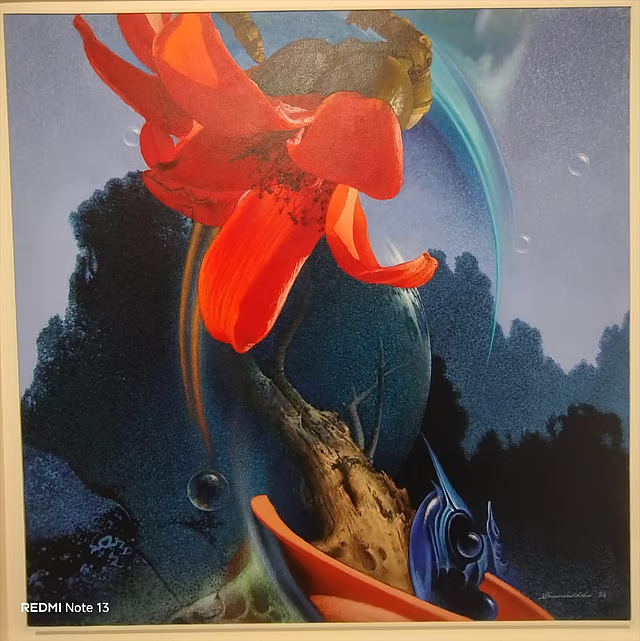
‘Shimul’, Ahmed ShamsuddohaPhoto: Courtesy of the author
Three of their paintings are featured in this exhibition. Ranjit’s three works are titled ‘Jibener Galpo’, Shishir’s ‘Chobi’.
Two artists from the 1970s, Mohammad Yunus and Jamal Ahmed, are contemporary, but their styles of painting are opposite. Yunus paints in the abstract style. All three of his works in the exhibition, titled ‘Gathon’, are innovative, with interesting shapes and lines of various colors on long canvases, almost like saris, and rich in diverse textures. On the other hand, Jamal’s paintings are realistic. The titles of the three works in the exhibition are ‘Bedeni’, ‘Buriganga’ and ‘Shapla’.
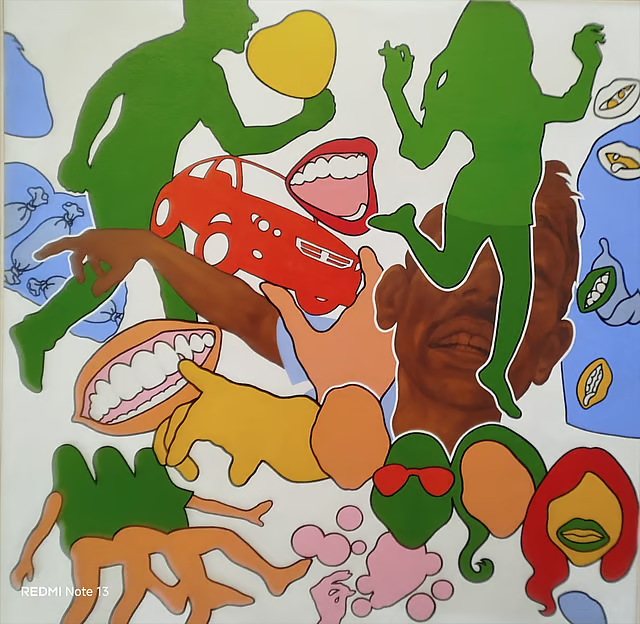
‘Picture’, Shishir BhattacharyaPhoto: Courtesy of the author
Ahmed Shamsuddoha paints realistic pictures. Two of his works in the exhibition are of flowers. A large painting of the Shimul flower impressed the audience.
Four paintings by artist Kanak Chapa Chakma, who depicts the traditional life and culture of the hill people of the Chittagong Hill Tracts region, have been placed in the art gallery. The painting depicts a blood-red sunset in front of the retreating figures of five hill women. The other two paintings are called ‘Breath of Spring’ and ‘Musical Art’.
Mohammad Iqbal, an artist from the 1980s, works in the figurative style. He is currently painting ‘Pictures of the Desire for Peace’. The other two works are titled ‘Sacred Circles’.
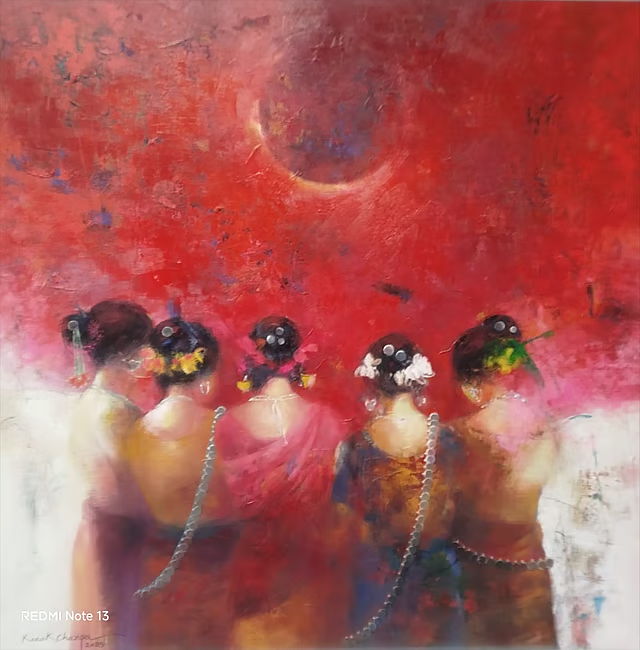
‘Sunset on the Mountain’, Kanak Chapa ChakmaPhoto: Courtesy of the author
Maqsuda Iqbal embraces the purity of the color Nipa. With this belief, countless spots and dots are applied across the large canvas in his paintings.
A relatively young artist, Kamaluddin, has painted three symbolic mixed media paintings titled ‘Worldwide Catastrophe’. In one, the globe is hidden above the figure of a girl, in the other, a boy with his upper body covered in a sack-shaped map, and a crow below. In the last painting, the hidden globe is hidden under the feet of a circus clown, a symbol of the developed world, as if identifying the state of contemporary world politics.
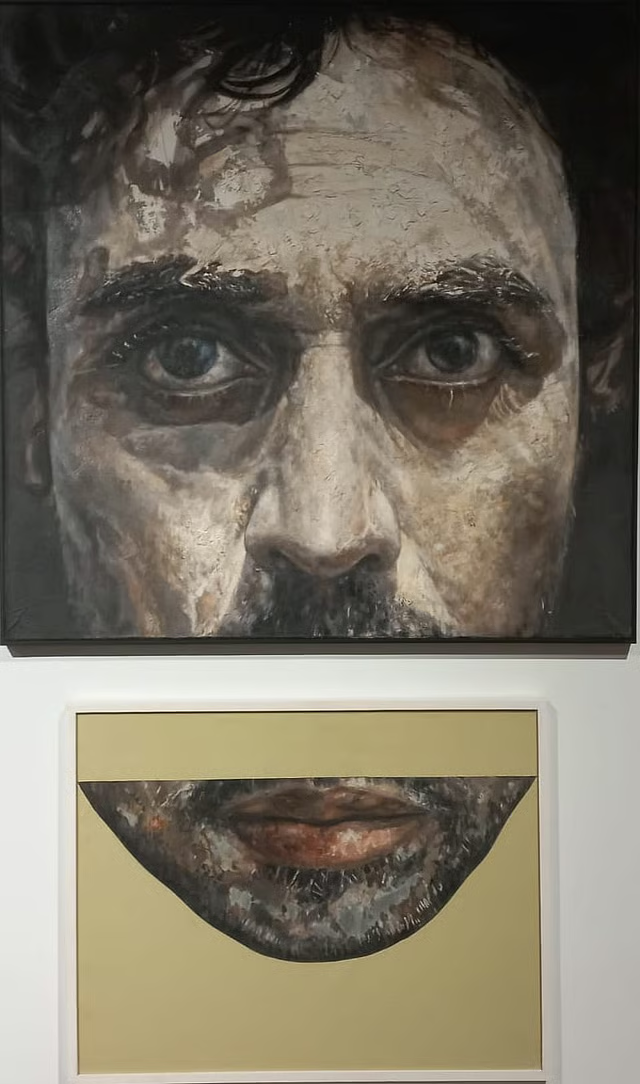
‘Dead face covered with a mask’, Shahid KaziPhoto: Courtesy of the author
All three paintings by another young artist, Kazi Shahid, are rich in realistic detailing. The first two are oil paintings with rich textures. One is of dried flowers and dried fish by the roadside. The last is a self-portrait of the artist on two large and small canvases, but the title is novel—’Dead Face Covered in a Mask’! Painted with glueless pigments.
The 46 works reflect human happiness, dreams, sadness, history and tradition, as well as the reactions of bewilderment and despair. Although four generations of artists are bound by the bond of guru and disciple, the relatively younger ones in this exhibition indicate a departure from the traditional art forms.
The exhibition will be open to visitors from 3:00 PM to 8:00 PM daily until July 4.


